29 facilities tracked24 operating3 under construction2 announcedDenver metro, Colorado
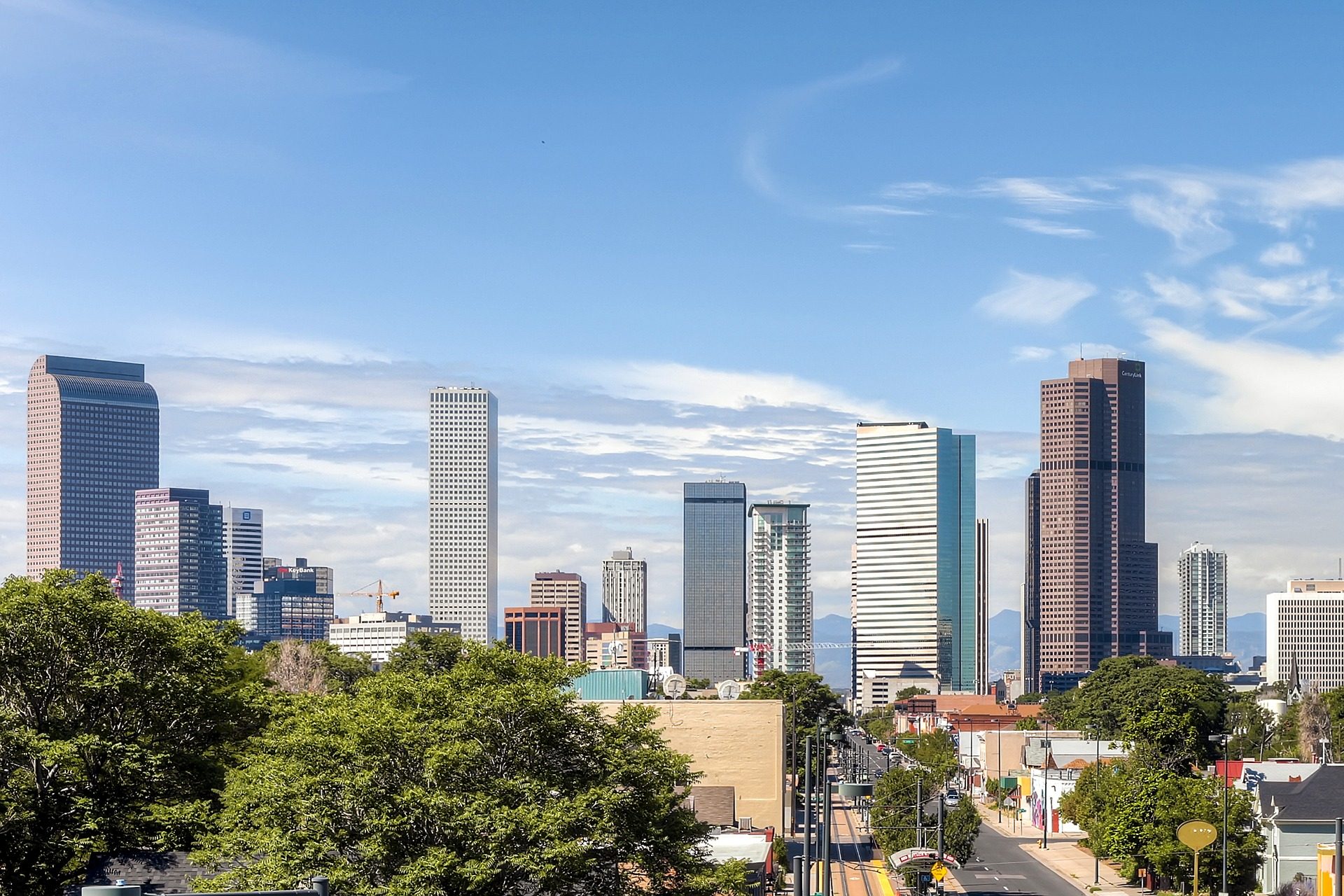
Downtown Denver skyline
Denver metro
The Data Center Collective
Tracking data center construction across the Denver metro.
One public inventory of every facility in the metro, tracked by status, with the technology shifts and the economic and ecological accounting that sit behind each project. Built entirely from public sources.
24Operating facilities in the current inventory
3Projects under construction right now
334 MWLargest announced campus, Vantage Trident in Aurora
Three pillars
Construction, technology, and impact, reported together so a project is never just a building announcement.
Industrial building under construction (illustrative photo)
Construction Tracker
Every data center project in the metro, tracked by status: operating, under construction, and announced. Operator, city, and size where known, with announced entries clearly marked as unverified.
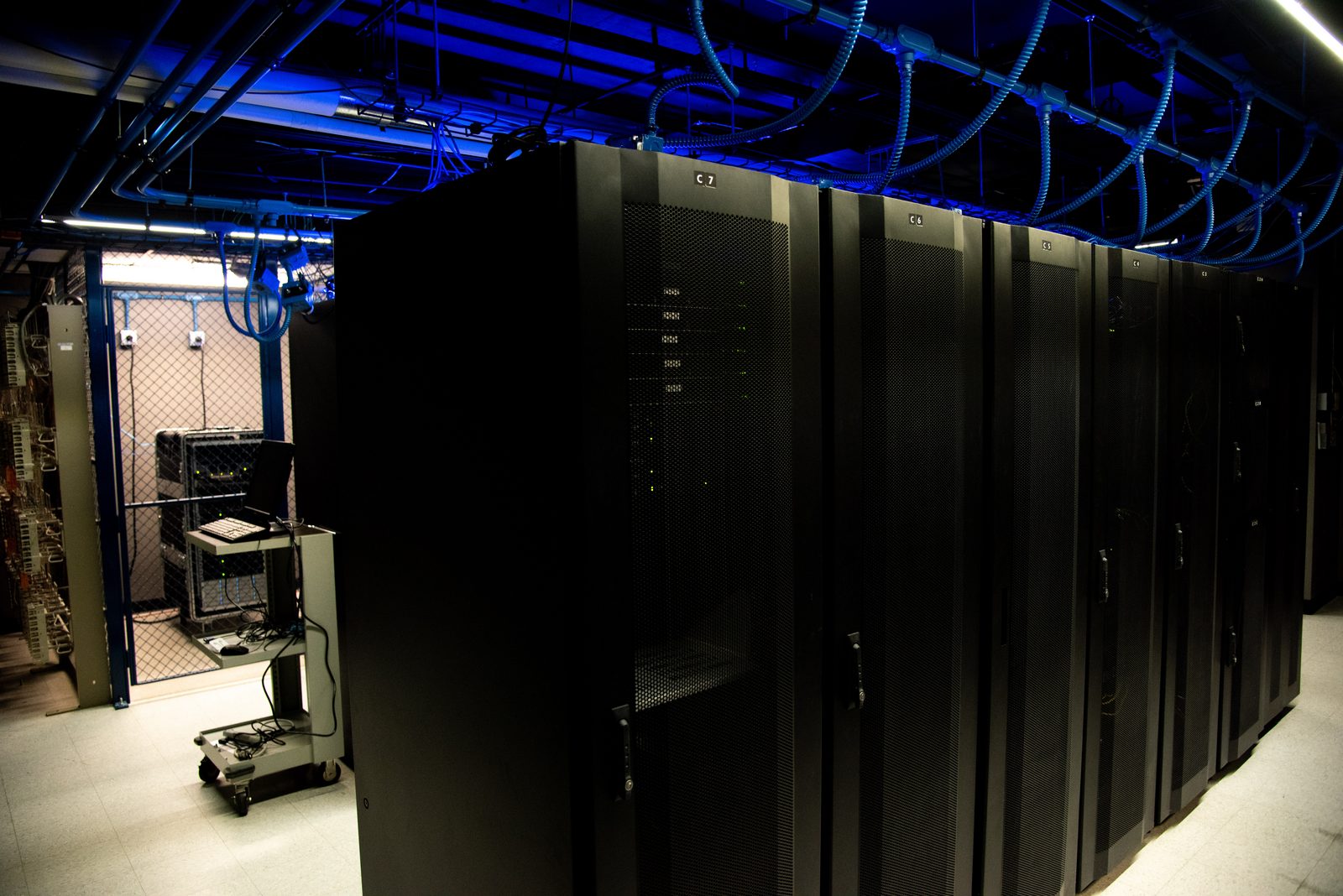
Server racks in a data center (illustrative photo)
Innovation Briefing
The latest data center technology, explained. Liquid cooling, next generation AI racks, power procurement, and the efficiency metrics that decide whether a design is current or already dated.
Power and cooling infrastructure (illustrative photo)
Impact Report
Economic and ecological accounting, including water, per project. Investment, jobs, and taxes alongside power, cooling, water use, and what the operator has not disclosed.
Featured story
From the October 1, 2026 example edition.
Aurora, early planning
The campus that could skip a public hearing
Vantage Data Centers is pursuing a project called Trident: a 143-acre campus in Aurora with a planned IT capacity of 334 MW. If built, it would be Colorado's largest data center.
The site sits in an industrial zone, which means city staff can approve it administratively, with no public hearing and no city council vote. That possibility has drawn organized community opposition, including petitions and town halls, with concerns about diesel backup generators and total power demand.
143 acres334 MW planned IT capacityEarly planningAnnounced, unverified
Announced, unverified
Operator
Vantage Data Centers
Project
Trident
City
Aurora
Site
143 acres
Planned capacity
334 MW IT
Status
Early planning
Community
Organized opposition
Announced entries reflect company statements and public filings. Capacity and timelines are not confirmed until construction starts.
Innovation, in brief
Four signals from the current briefing. Full treatment in the latest edition.
Liquid cooling is now mandatory for AI racks
Direct-to-chip liquid cooling has moved from option to requirement as rack densities climb past what air can handle. The market approached $3 billion in 2025, and the National Renewable Energy Laboratory in Golden leads Department of Energy cooling research.
NVIDIA Vera Rubin NVL72 enters production
The Vera Rubin NVL72 platform is in production, with the first CoreWeave deployment in September 2026. Rack scale AI systems are resetting power and cooling design for every new build.
Big Tech nuclear procurement wave
Meta has contracted up to 6.6 GW, with Amazon, Google, and Microsoft also signing nuclear agreements. Firm power, not just total power, is becoming the constraint on campus scale.
Sustainability reporting has stalled
Average PUE remains near 1.55 and only 27 percent of operators track water. The European Union introduces mandatory A-to-G energy and water labels in August 2027, which will reset disclosure expectations.
Sponsors
Sponsorship slots are a future feature of this proof of concept. No sponsors are listed here.
Future slotFuture slotFuture slot
Construction Tracker
Denver metro facility inventory
Every data center project in the metro, grouped by status. Size is shown where a public figure exists. Announced entries are company announcements and public filings, labeled as announced and unverified until construction is confirmed.
Data center exterior (illustrative photo)
Showing 29 facilities.
Operating in serviceUnder Construction active buildAnnounced, unverified early planning or announcement only
No facilities match that search. Try an operator name such as Flexential or CoreSite, or a city such as Aurora or Denver.
Note
Figures are reproduced from public sources as reported. Where a size is not listed, no reliable public figure was available at the time of compilation.
Latest edition
The Data Center Collective: Denver Metro Update
Example edition, compiled October 1, 2026. This is an example edition prepared to demonstrate format and depth. It is not a published issue.
The most consequential data center proposal in the Denver metro right now may never face a public vote. Planning documents filed with the City of Aurora, surfaced by an investigative report in September 2026, show Vantage Data Centers pursuing a project it calls Trident: a 143-acre campus in the Windler area near E-470 with two buildings totaling more than 860,000 square feet and a planned IT capacity of 334 megawatts, which would make it the largest data center in Colorado if built.
The reason it matters is process, not just scale. The site sits in an industrial zone, which means Aurora city staff can approve it administratively, with no public hearing and no city council vote. That possibility has drawn organized community opposition, including petitions and town halls, with residents raising concerns about diesel backup generators and the sheer power demand. State regulators prepared an environmental justice summary urging at least one community meeting before a permit application moves forward, noting the site's proximity to homes in a socioeconomically vulnerable area.
Vantage says it will develop the campus responsibly while addressing community concerns. As of October 1, the project is in early planning. No construction start has been confirmed, and no power or cooling design has been disclosed publicly. This is the single most important local project to watch: its scale, its approval path, and its community process will set the template for every large proposal that follows in the metro.
Aurora: the state's only hyperscale campus keeps growing
QTS, owned by Blackstone, is building Colorado's largest data center on a campus south of Denver International Airport. The first of three massive buildings is complete, the second is nearly finished, and the third building's footprint is being prepped. Total construction investment is estimated at more than $1 billion, with peak load around 160 to 177 megawatts, roughly four times the airport's own peak demand. QTS is paying for its own transmission infrastructure, including about $28 million in high-voltage lines and a substation, and its application to add 98 diesel backup generators is working through the state air-permit process. Aurora's economic development council reported the first building generated about $4.6 million in 2025 property taxes, with roughly 45 percent going to Aurora Public Schools, and projects about $200 million in investment for the second building.
Denver: first purpose-built colocation facility in two decades nears completion
CoreSite, the American Tower subsidiary headquartered in downtown Denver, has nearly completed the first building of its DE3 campus in the Elyria-Swansea neighborhood: 180,000 square feet with 18 megawatts of critical power, topped off in October 2025. It is the first purpose-built colocation data center constructed in Denver in twenty years. The full campus is planned at about 600,000 square feet and 60 megawatts, but additional buildings cannot be permitted during Denver's one-year moratorium on new data center construction, which runs through May 21, 2027.
Parker: Flexential's $192 million build targets January opening
Flexential is building its fifth Denver-area data center in Parker on a 17-acre site: 249,000 square feet and 22.5 megawatts, designed for high-density and AI workloads. Construction topped out in early 2026 and the company is targeting a January 2027 opening, with pre-leasing underway since 2024. Power comes from the Core Electric Cooperative, and the facility will use waterless cooling. Douglas County is poised to approve a $19.3 million tax rebate for the project.
The regulatory map
Denver is frozen until May 2027 under a unanimous city council moratorium. Thornton passed a one-year moratorium in September 2026 on new data centers larger than 50,000 square feet. Commerce City advanced a proposed six-month pause the same month. Aurora took a different path: it rejected a moratorium in August 2026 and instead directed staff to write dedicated data center regulations, while codifying a tiered water framework that bans new evaporative-cooled facilities. Both 2026 state data center bills died in the legislature, so Colorado has no statewide incentive program and no industry-specific environmental rules. The practical effect: nearly all current construction is concentrated in Aurora and Parker, with Denver proper on hold.
Innovation Briefing
Liquid cooling is now mandatory for AI racks, and Golden is at the center of the research. Air cooling cannot handle racks above roughly 30 kilowatts, and NVIDIA's latest rack generations run past 120 kilowatts, making direct liquid cooling a requirement rather than an option. The liquid cooling market nearly doubled in 2025 to approaching $3 billion. Consolidation followed fast: Ecolab acquired CoolIT Systems for $4.75 billion and Trane Technologies acquired LiquidStack, both in March 2026. The local angle is real: the National Renewable Energy Laboratory in Golden runs one of the world's most efficient supercomputing data centers and leads technical evaluation for the Department of Energy's $40 million COOLERCHIPS advanced-cooling program.
NVIDIA's Vera Rubin platform enters production. The Rubin generation, with 72 GPUs and 36 CPUs per liquid-cooled rack, entered production in July 2026, and CoreWeave brought up the first multi-rack Rubin cloud cluster in September. NVIDIA claims up to 30 times the agentic-AI throughput per megawatt of the prior generation, a vendor figure still awaiting independent confirmation. Analysts estimate each gigawatt of Rubin deployment generates about $40 billion in revenue, nearly 40 percent more than the previous generation.
Big Tech signs gigawatts of nuclear power. Exploratory interest converted to binding deals in 2025 and 2026. Meta contracted up to 6.6 gigawatts across existing plants and small modular reactor developers. Amazon contracted small modular reactors with Energy Northwest and took a stake in X-energy. Google and Kairos Power agreed to up to seven small modular reactors, and Microsoft's deal restarted Three Mile Island. Actual reactor electrons remain a 2030 story at the earliest, but the procurement wave signals where hyperscalers expect to get firm power. Locally, the parallel story is Xcel Energy's large-load proceedings at the Colorado utilities commission, where data centers account for the majority of projected energy growth and more than 1,900 megawatts of new large-load requests are queued through 2031.
Sustainability reporting stalls as the buildout accelerates. The Uptime Institute's 2025 survey found the industry's average power usage effectiveness stuck around 1.55, unchanged in a decade, while water tracking actually declined, with only 27 percent of operators now measuring water use. Meanwhile rack densities keep climbing. Relief may come from regulation: the European Union will impose mandatory A-to-G energy and water labels on data centers starting August 2027, with the top grade requiring power usage effectiveness at or below 1.15 and water usage effectiveness at or below 0.1.
Impact Report: QTS Aurora campus
Each edition features one project with full economic and ecological accounting. Fields with no public disclosure are marked as not disclosed. The blank fields are part of the story.
Economic
The campus represents more than $1 billion in construction investment, the largest data center investment in Colorado. QTS reports 400 to 600 construction workers on site and 70 to 85 permanent operations jobs at full buildout. The first building generated about $4.6 million in 2025 property taxes, with roughly 45 percent directed to Aurora Public Schools; the second building is projected at about $200 million in additional investment. QTS is funding its own grid connection, including about $28 million in high-voltage transmission lines and a substation. In June 2024, the Colorado utilities commission approved a confidential discounted economic development electricity rate for the campus; the terms were not disclosed. No community benefits agreement has been disclosed. Disclosure score: 3 of 5 (investment, jobs, and taxes disclosed; power rate terms and community benefits not disclosed).
Ecological
Power: Peak load of 160 to 177 megawatts, roughly four times Denver International Airport's peak. The contracted power source and generation mix were not disclosed. On-site backup consists of 40 installed diesel generators plus 98 additional units in a pending state air-permit application. Testing regime and emissions figures were not disclosed.
Water: Cooling type was not disclosed. Water withdrawal and consumption figures were not disclosed. No water usage effectiveness figure has been published. For context only, and not as this project's figures: major hyperscaler fleets publicly report water usage effectiveness between 0.12 and 0.34 liters per kilowatt-hour, and industry surveys show only about a quarter of operators track water at all. Aurora's tiered water framework, codified in 2025, bans new evaporative-cooled facilities, which constrains the cooling options for any future expansion here. Whether the campus sits in a stressed watershed, and how much of the local supply it draws, could not be determined from public sources.
Community status: The generator expansion drew critical coverage from Colorado Public Radio in July 2026. Aurora rejected a moratorium on new data centers in August 2026 but directed staff to write dedicated regulations. No public hearing has been required for the campus to date. Disclosure score: 1 of 5 (scale and generator count are public through permits and press; power source, water, efficiency, and emissions undisclosed).
The takeaway: QTS Aurora is the most economically documented data center project in the metro and simultaneously one of the least ecologically transparent. The tax and jobs figures are public because they pass through government channels. The power and water figures are not, because nothing requires their disclosure. That gap is the central tension this report will track across every project, every edition.
Sources
All URLs below were visited during research on October 1, 2026. Announced, under-construction, and operating statuses are distinguished in the copy above.
Vantage Trident Aurora proposal and community opposition: pagosadailypost.com
Power and cooling infrastructure (illustrative photo)
Impact Report, sample
QTS Aurora campus
Full economic and ecological accounting for Colorado's largest data center campus. Fields with no public disclosure are marked as not disclosed. The blank fields are part of the story.
Aurora, ColoradoUnder construction160 to 177 MW peakOver $1B investment
Economic disclosure
3 / 5
Investment, jobs, and taxes disclosed. Power rate terms and community benefits not disclosed.
Ecological disclosure
1 / 5
Scale and generator count are public through permits and press. Power source, water, efficiency, and emissions undisclosed.
Economic
Investment, employment, taxes, and grid costs as publicly reported.
Construction investment
More than $1 billion
Construction jobs on site
400 to 600 workers
Permanent operations jobs
70 to 85 at full buildout
Property taxes, building 1 (2025)
About $4.6 million
Share to Aurora Public Schools
Roughly 45 percent
Building 2 investment
About $200 million projected
Grid connection funding
About $28 million, operator funded
Electricity rate terms
Not disclosed
Community benefits agreement
Not disclosed
The campus represents more than $1 billion in construction investment, the largest data center investment in Colorado. QTS is funding its own grid connection, including about $28 million in high-voltage transmission lines and a substation. In June 2024, the Colorado utilities commission approved a confidential discounted economic development electricity rate for the campus; the terms were not disclosed. No community benefits agreement has been disclosed.
Ecological
Power, water, and community status. Water is tracked as a first-class metric.
Peak load
160 to 177 MW
Comparison
About 4x Denver International Airport peak
Contracted power source
Not disclosed
Generation mix
Not disclosed
Diesel backup, installed
40 generators
Diesel backup, pending permit
98 additional units
Testing regime and emissions
Not disclosed
Cooling type
Not disclosed
Water withdrawal
Not disclosed
Water consumption
Not disclosed
Water usage effectiveness (WUE)
Not disclosed
Watershed stress determination
Not disclosed
Water, in context
No water usage effectiveness figure has been published for this campus. For context only, and not as this project's figures: major hyperscaler fleets publicly report water usage effectiveness between 0.12 and 0.34 liters per kilowatt-hour, and industry surveys show only about a quarter of operators track water at all. Aurora's tiered water framework, codified in 2025, bans new evaporative-cooled facilities, which constrains the cooling options for any future expansion here. Whether the campus sits in a stressed watershed, and how much of the local supply it draws, could not be determined from public sources.
Community status: The generator expansion drew critical coverage from Colorado Public Radio in July 2026. Aurora rejected a moratorium on new data centers in August 2026 but directed staff to write dedicated regulations. No public hearing has been required for the campus to date.
The takeaway: QTS Aurora is the most economically documented data center project in the metro and simultaneously one of the least ecologically transparent. The tax and jobs figures are public because they pass through government channels. The power and water figures are not, because nothing requires their disclosure. That gap is the central tension this report will track across every project, every edition.
Source basis: public reporting and filings compiled October 1, 2026. See the for the full list.
About
What this project is
The Data Center Collective is a proof of concept for independent, public-source tracking of data center construction in the Denver metro, paired with plain-language technology coverage and per-project impact accounting.
Coverage
Construction Tracker: every data center project in the metro, tracked by status as operating, under construction, or announced. The current inventory covers 29 facilities across Aurora, Denver, Englewood, Centennial, and neighboring cities.
Innovation Briefing: the latest data center technology, explained without hype: cooling, rack architecture, power procurement, and efficiency measurement, with the local research angle where one exists.
Impact Report: economic and ecological accounting per project, with water treated as a first-class metric. What is disclosed is reported. What is not disclosed is labeled as not disclosed, so gaps stay visible.
Methodology
Public sources only. No non-public information is used, solicited, or published.
1Trade press and company announcementsOperator releases, construction milestones, and industry reporting.
2Permits and council documentsPlanning filings, air permits, moratorium actions, and economic development reports.
3Utility filingsLarge-load proceedings, rate approvals, and transmission commitments.
4Status disciplineOperating, under construction, and announced are kept distinct. Announced projects stay labeled as announced and unverified until construction is confirmed.
Contact
Correspondence placeholder for this proof of concept. This address is not monitored.
Placeholder address, shown to demonstrate placement only.
What is not here yet
This proof of concept is a static site: no paywall, no accounts, and no checkout. Pages are the homepage, the tracker, the latest edition, the sample impact report, and this about page.
Sponsorship and data products are noted as coming soon in the footer. No sponsor names are listed in this version.
Photo credits
Photography on this site is freely licensed and illustrative. No photo depicts a specific tracked facility.
Photo of New Orleans Data Center by Fogo Solutions (CC BY-SA 4.0)
Doel Nuclear power plant cooling tower and windmill by Sally V (CC BY-SA 4.0)
Industrial building being built on Leeds Road (A62) by habiloid (CC BY-SA)
Rack of computers in a datacenter by Wil Weterings (public domain)